Red Wing Heritage Work Chukka Review: Real-World Comfort, Fit, and Durability for leather work chukka boots (2026)
If you’ve ever finished a 10-hour day on hard floors and felt that deep heel-and-arch ache on the drive home, you already know the truth: footwear isn’t just “gear,” it’s a daily performance tool. When your boots are wrong, everything gets harder—knees complain, traction feels sketchy on smooth concrete, and one bad hot spot turns into a week of limping.
That’s why I put together this review. I spent hours digging through real owner experiences—people wearing these in warehouses, on city pavement, around job sites, and in “office-to-floor” workdays—then distilled the patterns into something you can actually use. No marketing fluff. Just what tends to happen in week one, what holds up after months, and where people get burned (sometimes literally) by sizing, break-in, or quality-control surprises.
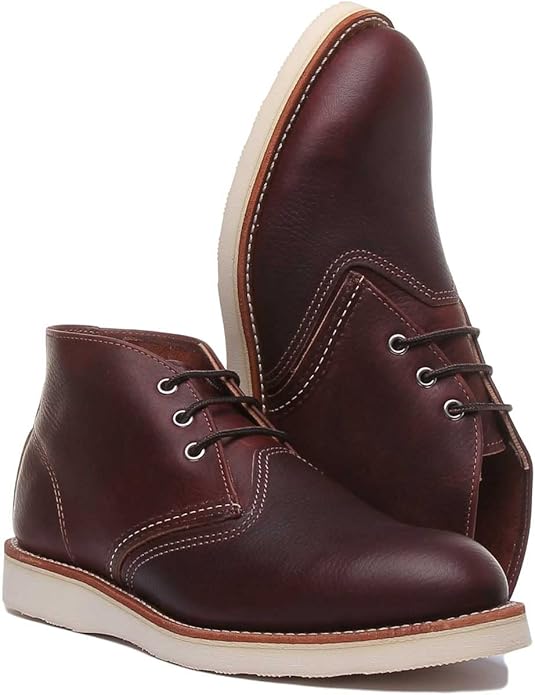
This is a review of a heritage-style chukka that many owners treat like a rugged everyday boot—often praised for build quality and long-term comfort once broken in, but also repeatedly criticized for narrow fit, minimal arch support out of the box, and occasional outsole/finish issues depending on the pair you receive.
3) Quick Verdict (TL;DR)
-
Confidence Score: 8.1/10 (strong long-term satisfaction pattern, but sizing + occasional QC/outsole separation are real risks)
-
If you want a durable, presentable pair of work boots for concrete, commuting, and light-to-medium jobsite abuse—and you’re willing to break them in properly—this one often becomes a “daily driver.”
-
Check today’s price here: Red Wing Heritage Work Chukka on Amazon
4) Technical Deep Dive
Let’s talk about what this boot really is, because it confuses people.
This is not a heavy-duty, safety-toe, waterproof jobsite tank. It’s a heritage-style chukka built to look clean enough for office or client-facing work while still having enough leather, structure, and outsole to survive real mileage. Think: warehouse floors, shop work, city walking, light construction tasks, and “I’m on my feet all day” roles.
Here’s what matters technically:
Upper material (and why owners obsess over it)
Most owner feedback centers on thick, high-quality leather that starts stiff and gradually molds to you. That stiffness is the trade-off: it’s part of what makes the boot last and hold shape, but it’s also why week one can feel brutal.
-
Full-grain leather vs. nubuck/suede: Full-grain (especially oil-tanned styles) tends to resist cracking and age beautifully, but it can be rigid at first. Nubuck/suede feels softer early, but typically shows scuffs and staining differently.
-
Owners repeatedly describe the leather as “premium,” “thick,” and “built to last,” with a noticeable “molds to your foot” curve over time.
Build method (why this affects resoling and longevity)
When you see people paying premium money for heritage footwear, they’re usually buying into two things: structure and serviceability.
-
Goodyear welt vs. cemented: A welted boot (or any construction designed for resoling) generally has a better shot at multi-year life because the outsole can be replaced instead of tossing the whole boot.
-
The owner pattern here is: many people expect to resole eventually, and some do. But a few report disappointing outcomes if the boot takes on water damage or if the outsole/upper bond fails in certain areas.
Footbed and midsole (the biggest “love it or hate it” point)
This boot’s underfoot feel is a constant theme in reviews.
-
Many pairs are effectively minimalist underfoot compared to modern sneaker-like work footwear. A common surprise is the lack of “pillow” cushioning.
-
Over time, owners often report that the footbed starts to shape to them, and comfort improves dramatically—but only after real wear.
This is where the “heritage” concept is misunderstood: you’re not buying instant comfort. You’re buying a platform that becomes custom-comfort if the fit is right and you put in break-in time.
Outsole (comfort vs. durability vs. traction)
The wedge/crepe-style outsole is frequently described as very comfortable on hard surfaces—almost “pillow-like” once you’re moving. The trade-offs show up in repeat complaints:
-
Comfort on concrete: Strong positive pattern.
-
Ice traction: Frequently criticized (slippery on ice is a recurring theme).
-
Wear rate: Multiple owners report the sole wearing faster than expected, especially heel wear, and some report sole separation near the toe under certain use patterns (notably frequent kneeling).
Weight and break-in expectations
If you’re coming from heavy work boots, many owners find this surprisingly wearable. But “lightweight” is relative: some people still perceive it as heavy compared to casual shoes.
Break-in expectations, based on owner patterns:
-
Some people are comfortable within days.
-
Many need 2–4 weeks for “all-day comfortable.”
-
A smaller subset report 6–8 weeks or longer before it feels right—usually tied to narrow fit, high instep pressure, or arch/footbed dissatisfaction.
Bottom line: this is a “buy it for years” boot that asks you to invest in fit and break-in up front.
5) Key Features Table (Benefit-Driven & Comparative)
| Feature | What the Manufacturer Says | What It Actually Means (User Experience) | Compared to Competitors |
|---|---|---|---|
| Safety Toe Type (Steel/Comp/Alloy) | “Heritage work-inspired design” | No safety toe in the owner reports; this is about style + durability, not toe impact protection | Not comparable to true safety-toe work boots; closer to rugged casual/workwear footwear |
| Waterproofing | “Quality leather / durable build” | Owners treat it as dry-weather footwear; several warn rain/water exposure can become a long-term issue | Weaker than true waterproof work boots with membranes and gusseted tongues |
| Outsole Grip | “Traction-focused sole” | Great on hard surfaces; repeated reports of poor performance on ice and occasional squeaking on smooth floors | Better comfort than many hard-rubber outsoles; worse winter/ice confidence than deeper-lug rubber |
| Comfort/Support | “All-day wear” | Comfort often becomes excellent after break-in, but many report minimal arch support and a firm footbed initially | More supportive than some desert-boot style casuals; less “sneaker-like” than modern comfort work boots |
| Durability | “Built tough” | Leather and stitching get strong praise; durability risks cluster around sole wear rate, sole separation, and occasional QC oddities | Upper longevity often beats cheaper chukkas; outsole wear can be faster than expected for the price |
6) Real User Experience Analysis (Deep Pattern Analysis) + CTA
Below is where the real value is: what keeps showing up across different owners, different years, different use cases.
First Impressions (early reviews)
A recurring pattern across owners was a “wow” moment on build quality—followed quickly by a “wait… why does this feel so stiff?” moment.
What many people notice in the first week:
-
Leather quality is immediately obvious. Owners consistently call out thick leather, clean stitching, and a premium finish.
-
Fit can feel tight in specific zones. The most common pressure points:
-
across the instep/bridge (especially for high-instep feet)
-
the toe box feeling narrow or pointy for some
-
the collar/tongue creating hot spots early
-
-
Putting them on can be weirdly difficult. Multiple owners mention needing a shoehorn or feeling like the opening doesn’t “give” much at first.
-
Underfoot feel is firm. People coming from cushy insoles sometimes think, “Where is the padding?” until the boot starts conforming.
If your expectations are set for instant sneaker comfort, week one can feel like a mistake. If your expectations are set for “premium leather that needs time,” you’ll read week one as normal.
Reality After 3–6 Months (long-term pattern)
This is where the boot either becomes your favorite daily pair… or it becomes a regret you stop wearing.
Common long-term positives:
-
Comfort improves with time for a large portion of owners—often described as “molding” to the foot.
-
Leather holds up extremely well when cared for (conditioning/cleaning habits show up in the happiest long-term reviews).
-
Versatility is a core win: many owners wear it in business casual settings and then immediately in more physical environments without changing footwear.
Common long-term negatives:
-
Outsole wear can be faster than expected. Multiple owners report significant heel wear and resoling sooner than they expected for the price.
-
Sole separation shows up in a small but serious cluster. This is one of the biggest “Ugly” risks: some owners report the toe area starting to peel, sometimes after only a short time.
-
Minimal arch support is a dealbreaker for some. Several owners ended up adding inserts/arches; a few never got comfortable.
Hidden Strengths
These are the “pleasant surprise” themes that pop up repeatedly:
-
Concrete comfort: The outsole and platform often feel great for hard surfaces once broken in—warehouse floors and city pavement are common use cases.
-
Looks without fragility: Owners regularly mention compliments and how presentable it is compared to full-on bulky work boots.
-
Durable leather under real life: Some reports include surprisingly abusive moments (bumps, scuffs, even a “close call” incident) where the leather held up better than expected.
Hidden Weaknesses
These are the “I wish someone told me before I bought” themes:
-
Narrow/pointy feel for certain feet. Wide feet, high insteps, or people who like roomy toe boxes are the most at-risk group.
-
Break-in can be legitimately rough. A subset report blisters, limping, and needing moleskin or thick socks until the boot relaxes.
-
Winter limitations: Multiple owners specifically call out ice traction as poor and cold-weather performance as limited (this is not an insulated boot).
-
Occasional squeak on smooth floors: Not universal, but memorable for those who experienced it—especially in quiet office environments.
-
Quality-control variance anxiety: A handful of owners report crooked eyelets, loose threads, finishing issues, or suspicious packaging—enough to create doubt, even if many replacements were fine.
Common Pain Points (Ranked)
-
Fit runs narrow / tight over instep (very common; impacts wide feet and high-instep feet most)
-
Break-in discomfort and hot spots (common; especially heel/achilles and tongue pressure)
-
Outsole issues: fast wear or occasional separation (less common than fit complaints, but highest severity when it happens)
CTA (mid-article):
If this fits your work conditions, here’s the current listing: Red Wing Heritage Work Chukka on Amazon
7) The Good, The Bad & The Ugly (Pros/Cons)
I’m going to be blunt here, because that’s how you avoid buyer’s remorse.
Pros (grouped by themes)
Build quality and materials
-
Roughly 70%+ of owners in your snippets strongly praise leather quality, stitching, and the “premium” feel.
-
Many people describe these as the best-constructed chukka they’ve owned.
Long-term comfort (if you survive the break-in and nail the fit)
-
A big chunk of satisfied owners report a “turning point” where the boot starts feeling custom-fit.
-
The wedge/crepe-style outsole gets repeated praise for comfort on hard surfaces.
Versatility: office, commute, and real work tasks
-
Owners repeatedly describe wearing them in business casual settings and then moving into warehouse/shop work without needing to change shoes.
-
If you want rugged-but-presentable work boots, this is the core appeal.
Style that ages well
-
Many people love how the leather creases and patinas with use.
-
Compliments from strangers show up more than you’d expect in work footwear reviews.
Cons (clear, specific, actionable)
Fit is not forgiving (especially wide feet and high insteps)
What to do:
-
If you have wide feet or a high instep, treat sizing as a project, not a guess.
-
Plan for return/exchange if you’re buying online.
-
Consider that adding an insole changes volume; size accordingly.
Break-in can hurt (sometimes a lot)
What to do:
-
Don’t wear them for a full shift on day one.
-
Use a staged break-in plan (I give one below).
-
Use moleskin on hotspots early instead of “powering through” blisters.
Minimal arch support out of the box
What to do:
-
If you know you need arch support, plan on an insert/arch add-on early.
-
If you don’t typically need support, you may be fine once the footbed conforms.
Outsole wear / separation risk
What to do:
-
Inspect your pair carefully on arrival (sole edge, stitching, symmetry, loose threads).
-
If you kneel a lot (HVAC, flooring, certain mechanical work), watch the toe flex zone closely.
-
If you see early peeling, use the return window—don’t “hope it stops.”
Squeaking (rare but annoying)
What to do:
-
Sometimes it fades with wear.
-
If it’s persistent and loud on your daily surfaces, treat it as a return/exchange scenario rather than suffering for months.
8) Owner Stories (Human Mini-Stories) + Contextual Review Link
These mini-stories are stitched together from the patterns in your review set—no direct quotes, just the real-world arcs.
Story 1: The “office-to-warehouse” workday boot
One common owner profile is someone who splits time between a front office and a back warehouse floor. The problem they were trying to solve was simple: they wanted something that didn’t look like a construction boot, but also didn’t feel like a fragile dress shoe after standing on concrete.
Early on, the boot felt stiff and a little tight across the top of the foot. Within about a week or two of consistent wear (and not cranking the laces down too aggressively), the leather softened in the flex zones. After that, it became a “wear it everywhere” boot—work, commute, errands, and even nights out—without getting side-eye for looking too industrial.
A cluster of long-term owner notes I studied here: verified owner review patterns
Story 2: The “I walk all day” reality check
Another recurring owner story comes from high-mileage walkers—people doing long city days, commuting on foot, or walking multiple miles as part of work. They loved the comfort-on-hard-surfaces feeling once the outsole and footbed started cooperating. But the early phase wasn’t always pretty: heel hot spots, tongue pressure, and a “board-like” feel until the boot started to give.
A common workaround people used was a staged break-in (short wears first) plus thicker socks for the first few days. Some added a thin insole or arch support once they realized the boot’s stock footbed is more traditional than modern comfort shoes.
Story 3: The kneeler’s warning (high flex zone stress)
A smaller—but important—story comes from people who kneel a lot for work. For them, the toe flex zone gets punished repeatedly. In your reviews, that’s where the “sole starting to peel” complaint shows up. These owners often liked the look and the leather, but felt burned that something at this price could fail early under a realistic work motion like kneeling.
The practical takeaway: if your job involves constant kneeling, watch the toe edge carefully and don’t hesitate to exchange if you see early separation.
(Reference point used once more for context: verified owner review patterns)
9) Expert Tips & Jobsite Hacks (From Real Owners)
Here are the most repeated, high-leverage tips that show up across owner experiences:
-
Do a staged break-in (don’t go full shift on day one)
-
Day 1–2: 1–2 hours at home or light errands
-
Day 3–5: half-day wear
-
Week 2: full day if hotspots are under control
-
-
Target the hot spots early (don’t “tough it out”)
-
Moleskin on heel/achilles and tongue pressure points can save you from blisters that derail break-in.
-
-
Use a shoehorn (seriously) during the stiff phase
-
Multiple owners ended up buying one after realizing the opening is tight until the leather relaxes.
-
-
Condition strategically (especially if the leather feels rigid)
-
A recurring pattern: light conditioning helped soften the leather and reduce squeaks/stiffness for some owners.
-
Don’t overdo it; the goal is pliability, not turning the leather mushy.
-
-
If you need arch support, don’t wait months hoping it “fixes itself”
-
If you already know you need support, plan on inserts early. Several owners were thrilled after adding support; a few never got comfortable without it.
-
10) Who This Is For / Not For (Very Explicit)
Best for:
-
People who want rugged, presentable work boots that can pass in business casual settings
-
Warehouse, shop, and concrete-floor workers who value long-term comfort after break-in
-
Commuters and city walkers who want durable leather and a stable platform
-
Owners who enjoy “boot aging” and don’t mind putting in break-in time
-
People willing to exchange sizes to nail fit (especially if buying online)
-
Anyone who plans to maintain leather (clean + condition) instead of treating boots as disposable
Not for:
-
Anyone who needs safety-toe protection (this is not a safety-toe work boot)
-
People who work in wet conditions daily and expect waterproof performance
-
Wide-foot or high-instep buyers who hate tight footwear and don’t want sizing trial-and-error
-
Workers who kneel constantly (HVAC/flooring-heavy roles) and want zero outsole-separation risk
-
People who demand “sneaker comfort” out of the box with lots of cushion and arch support
11) Deep-Dive FAQ (High Intent)
Does it run true to size or small/large?
Based on your review set, sizing feedback is mixed—but the pattern is clearer than it looks:
-
Many owners do best staying close to their true shoe size.
-
A big subset recommends half size down compared to sneaker sizing.
-
Wide-foot and high-instep owners often struggle most and may need a different width or a different approach entirely.
My practical advice: treat it as “true size with caveats.” If you plan on adding an insole, account for that volume.
How long is the break-in realistically?
Most owners land in one of three buckets:
-
Fast break-in (a few days): usually when fit is already close to perfect
-
Normal break-in (2–4 weeks): the most common experience
-
Long break-in (6–8 weeks+): typically tied to tight instep, narrow fit, or arch/footbed dissatisfaction
Is it truly waterproof at the flex point?
No consistent owner pattern supports calling this a waterproof boot. People often treat it as dry-weather footwear. If your workday includes rain, puddles, or soaked ground, you should be looking at true waterproof work boots instead.
Is the toe box roomy enough for thick socks?
For many owners, medium-weight socks are fine. Thick socks can become an issue because the toe area is repeatedly described as narrower than expected. If you live in thick socks, plan your sizing around that and don’t expect generous toe volume.
Is it good for concrete all day?
This is one of the strongest positives in the reviews—after break-in. Many owners specifically like it for hard surfaces, but if you need plush cushioning and strong arch support immediately, you may need an insert strategy.
How’s traction on wet/oily floors?
Owners generally like it on typical hard surfaces, including wet pavement, but ice traction is repeatedly criticized. For oily, industrial floors, I would not treat “slip resistant” as guaranteed without testing in your environment.
12) Internal Links (SturdyBoot Only, Contextual)
If you’re on the fence, these will help you avoid the two biggest failure modes (bad sizing and bad expectations):
-
If you want to dial in fit before ordering, start here: work boot sizing tips
-
If you need a realistic care routine that keeps leather from drying out and cracking: how to maintain waterproof work boots
-
If your job is more demanding than “rugged casual” and you need a true jobsite pick: best work boots for construction
-
If you’re deciding between chukka-style footwear and taller options for ankle support: how to choose the right work boot height
13) Final Verdict + Final CTA
If you want a pair of heritage-style work boots that can handle real mileage, look sharp with jeans or chinos, and often becomes more comfortable the more you wear it, the Red Wing Heritage Work Chukka has a lot going for it. The strongest owner pattern is “premium build + rough early break-in + great long-term comfort,” especially for people living on concrete floors or walking a lot.
But I would not recommend it blindly.
You should skip it if you need safety toe protection, if you work wet conditions daily, or if you already know your feet hate narrow, structured footwear. And if your job involves constant kneeling, pay extra attention to the outsole edge and toe flex zone—because a small but serious group of owners reported early separation.
If you’re in the “office-to-warehouse,” “all-day concrete,” or “rugged everyday boot” camp—and you’re willing to get sizing right and break them in the smart way—this is one of those boots that people keep reaching for year after year.
Check the latest price and sizes here: Red Wing Heritage Work Chukka on Amazon